
Most contractors in the Austin metro already have the thing their marketing is missing. It is sitting on the lead tech’s camera roll, or it was there for twenty minutes yesterday afternoon and then the crew drove off. The job site is the only place your work exists in a state anyone can see. Once the homeowner’s furniture is back and the dumpster is gone, it is just another house in Round Rock.
This is a list of what to film before you leave, in the order it tends to be useful. None of it needs a crew from us. The point is to build the habit, so that when you do bring us out for a shoot day, there is a year of real footage behind it.
Why the job site and not the office
A homeowner in Cedar Park deciding between three roofers is not looking for a commercial. They are looking for proof that you show up, that your crew is careful around their property, and that the finished work looks like the estimate said it would. All three of those things are visible on a job site and invisible in an office.
The second reason is cost. Footage filmed while you are already there costs nothing but the twenty minutes. Footage filmed on a return trip costs a truck, a tech, and half a day of lost production. Film it while you are there.
Shot one: the problem, before you touch it
Before any tear-off, before the old unit comes out, before the first shovel goes in, film what you found. The hail-bruised shingles. The rusted condenser. The patio that drains toward the foundation. Thirty seconds, phone held steady, with someone saying out loud what is wrong and what you are going to do about it.
This is the shot most contractors skip, and it is the one that makes every later shot mean something. A finished roof is a finished roof. A finished roof next to the one that was leaking is a reason to call you.
Shot two: your crew setting up
Tarps going down over the landscaping. Cones in the street. The lead tech knocking on the door and introducing himself. These are boring to you and reassuring to a homeowner in Lakeway who has heard stories about the other kind of crew.
Keep it short and keep it real. You do not need to stage anything. If the crew is already careful, the footage will show it.
Shot three: the part nobody sees afterward
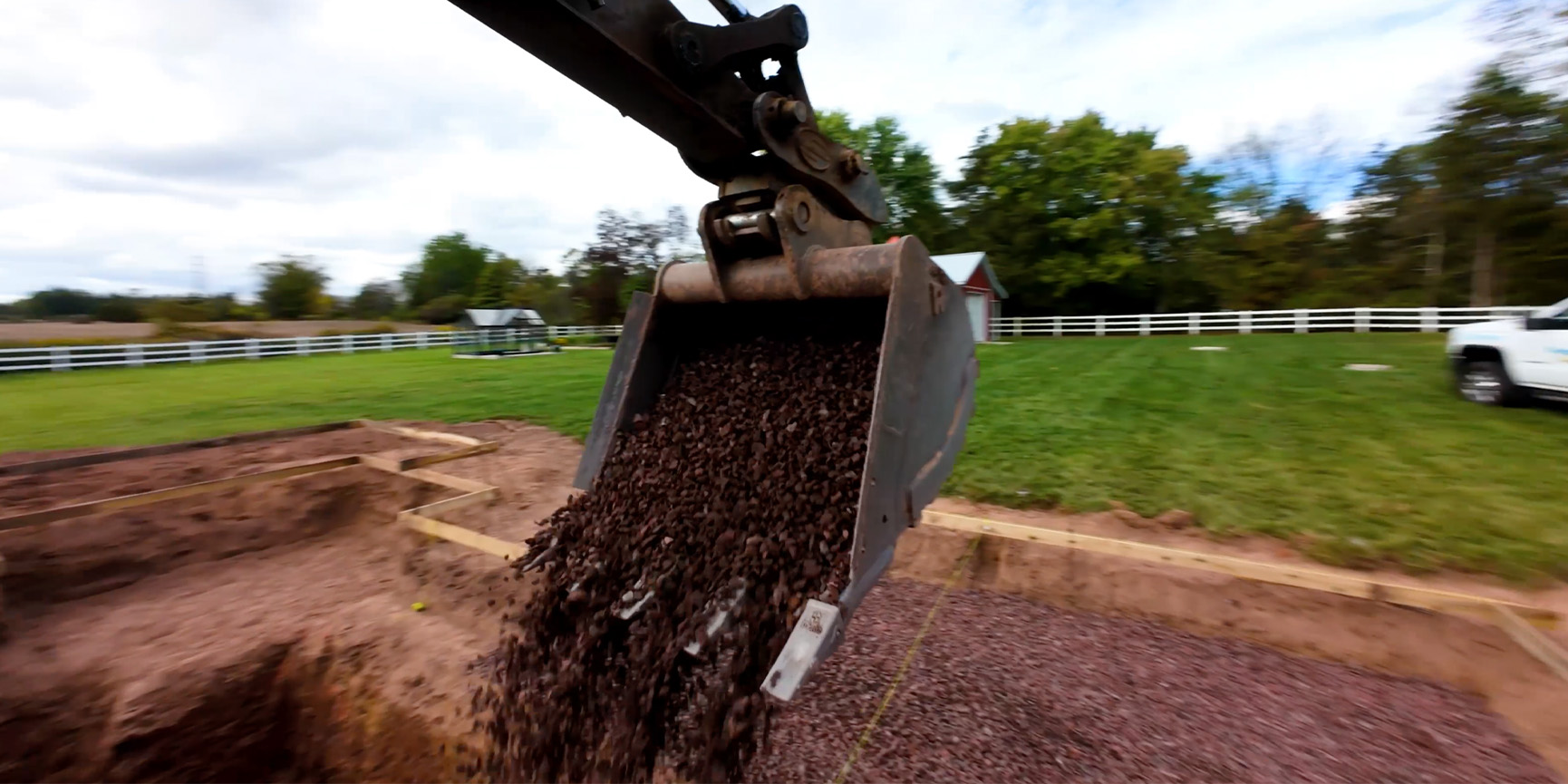
Decking and underlayment on a roof. The brazed line set on an HVAC install. The base layer and compaction under a paver patio. The rough plumbing before the drywall goes up. This is the work that separates a contractor who does it right from one who does not, and it is covered up within hours.
Film it with the person who did it explaining what they are looking at and why it matters. One take, one minute, no script. These are the clips that answer “why are you more expensive than the other guy” without you ever having to say it.
Shot four: the owner or lead explaining a decision
Somewhere in every job there is a decision: why this flashing detail, why the unit is sized the way it is, why the pool deck slopes that direction. Film the person who made the call explaining it to the camera as if they were explaining it to the homeowner. Plain language. Hands pointing at the thing.
This is the closest you can get to a referral without a referral. It shows how you think.
Shot five: the finish, from the same spot as shot one
Stand where you stood for the before shot and film the same thing finished. Same angle, same framing if you can manage it. The edit will cut between them and the comparison does the selling.
If the job is outside, do this when the light is soft, early morning or the last hour before sunset. A finished roof at noon in July looks flat. The same roof at 7pm looks like the photo on your truck wrap.
Shot six: the homeowner, if they will do it
Do not ask for a testimonial. Ask one question: “What were you worried about before we started?” Let them answer. Then ask, “How did it go?” Two questions, two minutes, and you have the most believable thing on your website.
If they say no, thank them and move on. Some will say yes, and those are the ones you want on camera anyway.
Shot seven: the drone pass, when it is worth it
A roof, a full landscape install, a pool, a new build: these all read better from thirty feet up. A water heater does not. Bring a drone for the jobs that need it and skip it for the ones that do not. Flying one for a business needs a licensed pilot, which is why a shoot day with us includes the drone at no extra charge.
Shot eight: the truck leaving
Yes, really. Crew loading up, driveway swept, the homeowner at the door. It is the shot that closes almost every short-form piece, and it takes ten seconds.
Who should hold the phone
Not the owner, most of the time. The owner is on another site, on the phone with a supplier, or doing the walkthrough. Pick one person on each crew, give them the list above, and make it part of the close-out. Put it on the same checklist as the final sweep.
Phone footage is fine for everything above. Hold it vertical, 9:16, because that is where it will run. Wipe the lens before you start. Get closer than you think you need to. Do not zoom.
What the footage turns into
Raw clips on a phone are worth nothing until somebody cuts them. That is the gap most contractors fall into: a thousand clips, zero posts.
Unlimited video editing exists for this. You send what the crew filmed, we cut it into 9:16 pieces and send back ideas for what to film next, for $229/wk. Pause it the week there is nothing to cut and start it back up when there is. A busy roofing crew in Georgetown during storm season can feed that queue for months on nothing but close-out footage.
When a job is big enough to deserve more than phone footage, a local shoot day is $1,100/day anywhere within 100 miles of our Cedar Park office, which covers everything from San Marcos up to Georgetown and Leander. That is the day we film the owner interview, the finished project at the right hour, and the drone pass, and it sits on top of the everyday footage rather than replacing it.
The habit is the whole thing
One good shoot day makes a nice video. Six months of crews filming the eight shots above makes a company that looks like it works every day, because it does. If you want help setting up the list for your crews, or want to see what the footage you already have could become, book a call. We are in Cedar Park and we have probably driven past your job site.
See also: video production in the Austin metro.