
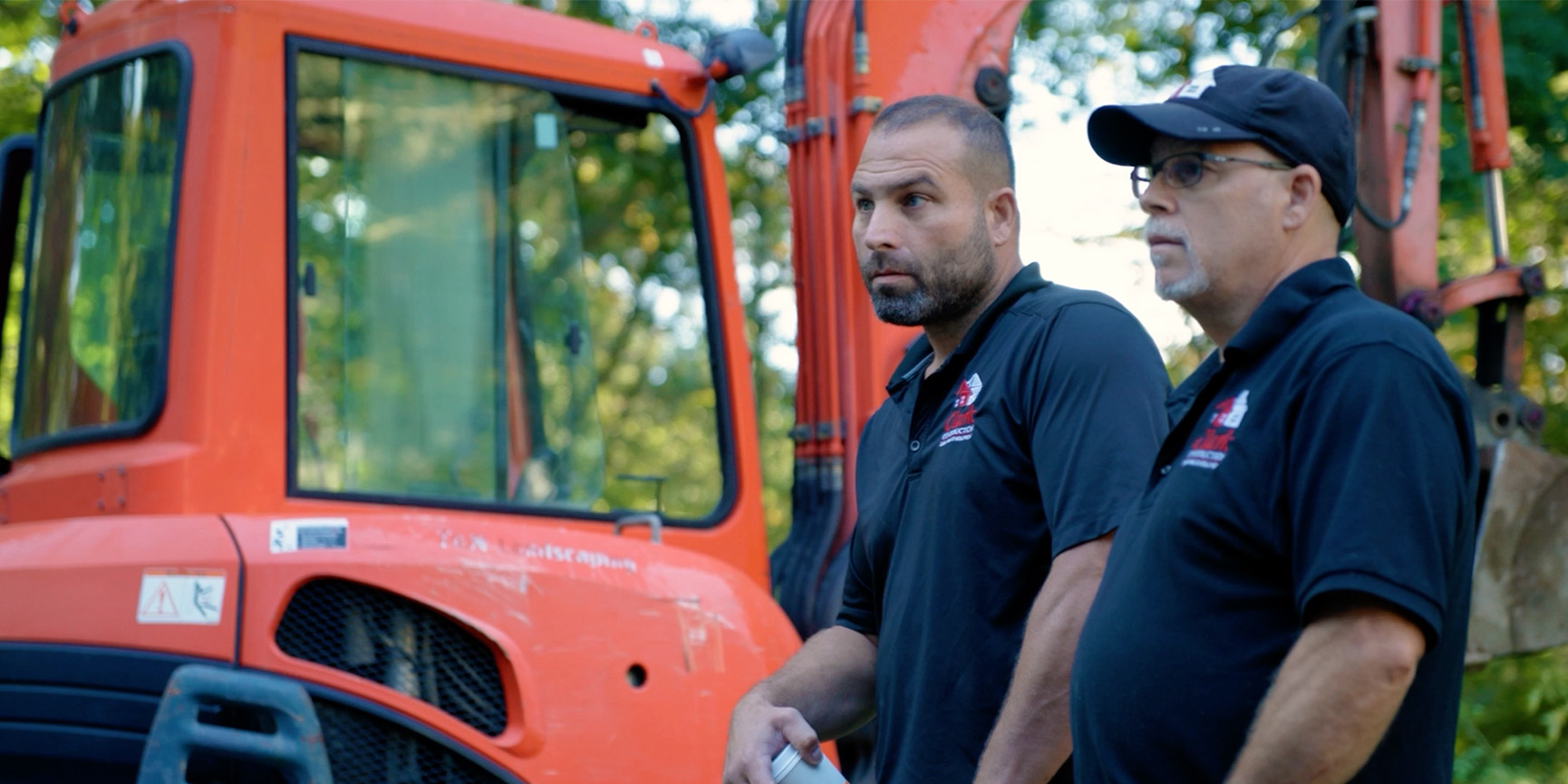
A kitchen remodel in West Hartford or a whole-house renovation on the shoreline is not a purchase. It is a decision a family makes once or twice in their life, usually with a number attached that makes them nervous, and they make it based on who they trust. In Connecticut that trust used to come entirely from referrals. It still mostly does. The brand film is what happens to the referral after it is made.
How a job actually gets won here
Here is the sequence, as we have watched it from our Ridgefield office since 2019. A homeowner asks a neighbor who did their addition. The neighbor gives a name. The homeowner looks the name up that night, on a phone, in bed. What they find in the first ninety seconds decides whether the referral turns into a call.
If they find a website with a logo and a gallery of finished rooms, the name goes onto a list with two others. If they find the owner on camera, in a finished home, explaining how they run a project and what they do when something turns up behind a wall, the name goes to the top of the list and the other two are now being compared to it.
That is the entire argument for the brand film. It does not replace the referral. It makes the referral stick.
Why it matters more in Connecticut than most places
Three reasons, all local.
The ticket is high. A full remodel in Glastonbury, Guilford, or Stamford can run well into six figures, and a custom build in Litchfield County or the Fairfield County backcountry is a seven-figure relationship. At that size, a homeowner is not shopping on price. They are shopping on the question “will this person still be the same person in month eight.” Video answers that in a way a gallery cannot.
The houses are private. Your best work is behind a stone wall on a two-acre lot, or inside a 1790 farmhouse that looks exactly the same from the road. Nobody drives past it and knows. The only way the next family sees it is if you filmed it, with the owners’ permission, before the furniture came back.
Reputation travels fast and small. Connecticut towns are small enough that a bad experience is known at the next school pickup, whether that is in Madison, Simsbury, or Danbury. That cuts both ways. A film with two real clients in their own homes, saying in their own words what the process was like, carries more weight here than it would in a market where nobody knows anybody.
What goes in it
Four things. The owner on camera, unscripted, in a finished home, talking about why they build or remodel the way they do. Two clients, in their own houses, talking about the process rather than the result. The work in progress, framing and trades on site, so it is clear this is a company that builds and not just one that photographs. And the reveal, the finished home at the right hour, with the family in it if they will allow it.
What stays out: a script, stock footage, a voiceover, and a logo animation. Connecticut homeowners have seen plenty of polished marketing. What they have not seen is a contractor being plain with them.
What it costs
A two-day film is the version that gets used for years. Day one is the owner interview and one finished home, with the drone pass included at no extra charge on any shoot day. Day two is two client interviews and an active site. That comes to $2,200 in day rate, $250 in planning for the campaign, and $1,500 for the edit, which is flat rate by runtime and never hourly. Two revision rounds are included.
The local day rate covers the whole of Connecticut from the Ridgefield office: Fairfield County, New Haven and the shoreline, Hartford and its suburbs, Litchfield County, and the Quiet Corner in the northeast. No travel charge anywhere in the state; the rate is on the pricing page.
For reference, the national range for a comparable multi-day brand film tends to run from $7,500 to $12,000. That is a market figure, not ours. The gap mostly comes from the fact that the same small team films, edits, and runs the ads, with nothing subcontracted.
Where it runs once it is finished
The top of the homepage first. Then the about page, then the first email a lead gets after the inquiry form. Those three placements alone do most of the work.
After that, the film becomes raw material. A thirty-second cut runs as a Meta ad aimed at the towns you want to build in. A fifteen-second cut runs on your own YouTube. Each client interview becomes its own short piece. Unlimited video editing exists for exactly these cutdowns, so one shoot produces a year of posts instead of one video that gets watched twice and forgotten.
A composite case
Take a remodeler we will call the Farmington Valley firm: twelve people, mostly kitchens and additions, work booked almost entirely through referrals, losing one bid in three to a competitor whose work is not better. The problem is not the referrals. It is what happens in the ninety seconds after the referral, when the homeowner looks both companies up and one of them has a face and a voice and the other has a gallery.
The film does not win every bid. It changes what the homeowner is comparing. Instead of comparing two galleries and three quotes, they are comparing a person they feel they have met to two they have not.
Do you need one
If you are booked out eighteen months and turning down work, no. Keep the referrals coming and film the job sites for later. If you are losing bids you should be winning, or if the referral pipeline has slowed and you are not sure why, the brand film is the cheapest thing that fixes it and the one that keeps working longest.
Book a call and we will tell you which one you are. We are based in Ridgefield and film across Connecticut from there.
See also: video marketing for remodelers and for custom home builders.